McCoy & Hiestand: Home of the Lady Litigator
- Home
- Louisville Car Accident Attorney
- Do I Need a Witness to Prove a Car Accident Case in Kentucky?
How a Witness Can Support an Accident Claim
No, you don’t need a witness to prove a car accident case in Kentucky.
If no one saw the crash, or at least no one stayed around to say what happened, it’s easy to assume your case is dead on arrival, but it’s usually not. Car accident claims are often built on evidence that doesn’t talk, doesn’t forget, and doesn’t get flustered under pressure.
That’s the silent witness: the physical and technical proof that supports your version of events even when there’s no human being standing next to you to back it up.
That matters because unwitnessed crashes are not some strange, rare case.
The fact is, they happen all the time. A driver changes lanes without looking. Somebody runs a light at a quiet intersection. Two cars crash in a parking lot or on a side road. Later, both drivers tell different stories. That doesn’t mean the truth disappears. It just means the truth has to be found somewhere other than a bystander’s memory.
If you’re worried that your case feels like a he-said-she-said dispute, that makes sense, but don’t be too pessimistic. The real question isn’t whether you have a witness to prove a car accident; it’s whether the evidence around the crash supports your version better than the other driver’s.
In many cases, it does.
How Can I Prove Fault in Kentucky Without an Eyewitness?
Proving fault in Kentucky without an eyewitness happens more often than people think.
Civil cases aren’t about proving every detail with total certainty. They’re about showing that your version of events is more likely true than not true. That’s what the preponderance of evidence standard really means.
It’s not about perfection, it’s about persuasiveness.
That distinction takes some pressure off right away. You don’t need a random stranger who saw everything from start to finish. Honestly, even when people do have witnesses, those witnesses aren’t always that useful. Human memory can be messy. People miss angles, traffic signals, speed changes, and the few seconds that matter most. A witness may be sincere and still be wrong. Physical and technical proof can be a lot cleaner than that.
This is why proving fault without witnesses usually comes down to the full picture. What do the cars show? What does the road show? What does the timing show? What do the photos show?
If the damage pattern, vehicle placement, debris, and digital evidence all line up with your story, that can carry real weight in a no-witness car accident claim.
The kinds of evidence that often matter most include:
- Damage to both vehicles
- Skid marks, gouge marks, and debris from the scene
- Lane markings, traffic signs, and signal placements
- Final resting positions of the vehicles
- Any dashcam footage of the accident
- Black box or event data recorder information
- Timestamps, lighting, and road conditions
What’s the Role of Physical Evidence in My Claim?
Physical evidence plays a major role in your claim because it shows what happened without relying on anyone’s opinion. That’s what makes it so useful.
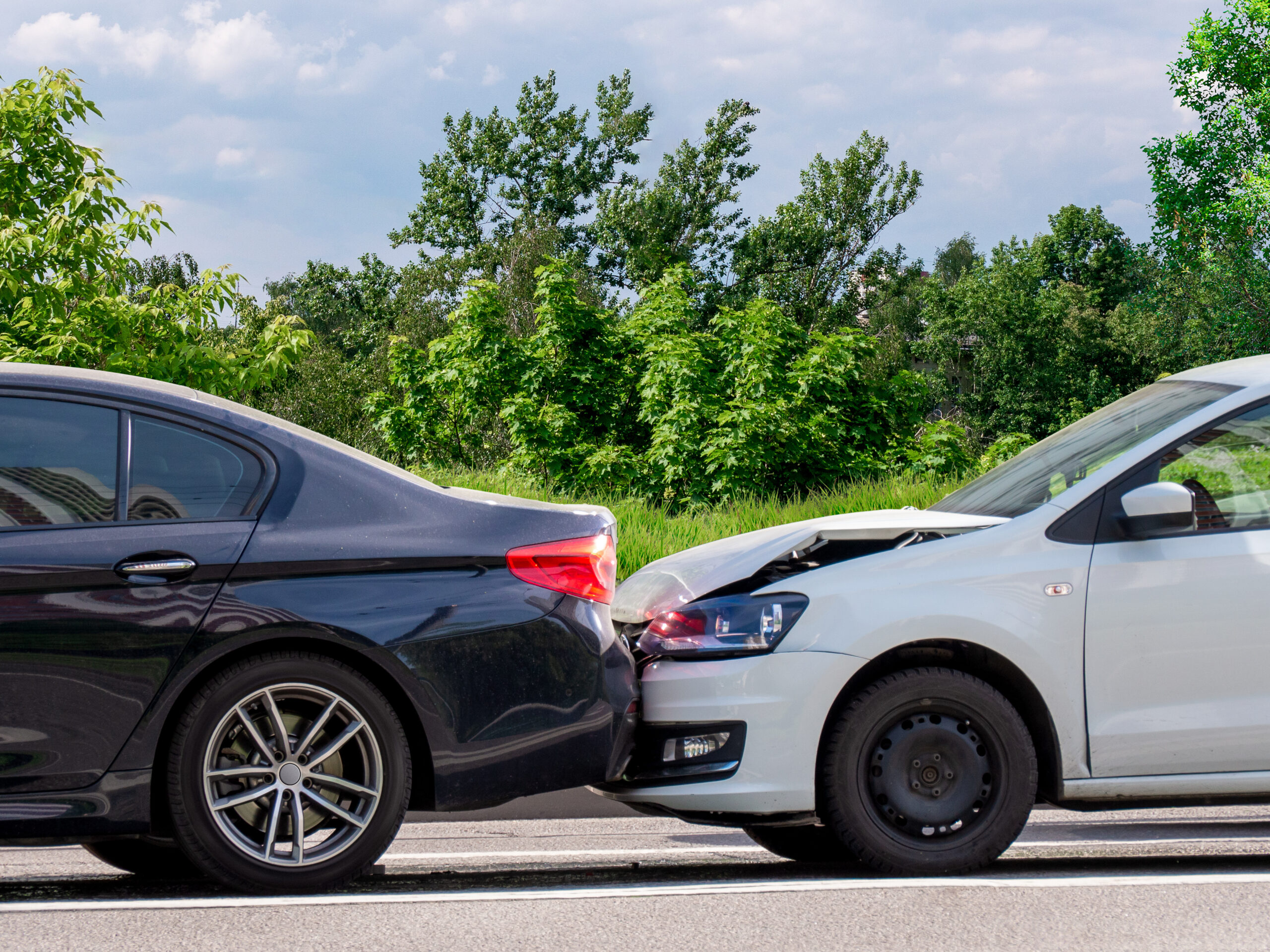
Things like the position of the cars, the roadway, broken parts, scrape marks, paint transfer, all of that can reveal angle, movement, speed changes, and point of impact in a way that spoken testimony sometimes can’t.
This is one reason you should think about the crash scene differently. It’s not just a stressful moment to survive and leave behind. It is also a temporary field of evidence. The scene starts changing almost immediately. Cars get moved. Debris gets cleared. Rain washes away marks. Tow trucks arrive.
Time matters here more than people realize.
The damage itself can also be surprisingly revealing as well. A crushed rear bumper may tell one story, while damage along the side panels tells another. A front-end impact can suggest something very different from a straight rear-end hit. Even relatively minor damage can help show who entered whose lane, who turned across traffic, or who failed to yield.
This is where circumstantial evidence in car crashes becomes really important.
Circumstantial doesn’t mean weak. It just means the facts point to the conclusion instead of saying it out loud.

Work With Sheila and Chad Today
How Can I Use Digital Evidence as a Silent Witness?
Digital evidence can be a powerful silent witness in car accident cases. Sometimes, in fact, it ends up being the most persuasive proof available. That’s because modern vehicles and devices record a lot more than most drivers realize.
Sometimes the crash has already been partially documented before either driver even starts explaining it.
Dashcams are the obvious example. If you have dashcam footage of a car accident, that can instantly change the whole case. Video can show lane position, signal lights, speed changes, turn movements, or the exact moment the other driver crossed into your path.
It’s hard to argue with clear video footage.
However, dashcams aren’t the only digital evidence that matters. Some vehicles store event data. Nearby businesses may have security cameras. Traffic cameras may catch part of the sequence. Phones may help establish timing and location. GPS logs can sometimes help, too.
This doesn’t mean that every crash comes with a perfect digital package wrapped up and ready to go, but it does mean the silent witness is often stronger than people expect.
If digital evidence exists, act quickly and do these things:
- Save your original files right away
- Back up your footage or data in multiple places
- Ask nearby businesses about surveillance before it gets erased
- Tell your lawyer or insurer immediately that digital evidence may exist
- Do NOT edit, trim, or overwrite the original recording
That last point matters. Once the original is gone, it can create unnecessary problems for your case.
How Can a Kentucky Police Report Impact My Case?
Kentucky police reports can help your case, but they don’t decide it by themselves.
A police report, as evidence, can be useful because it captures the basics: where and when the crash happened, what the officer observed, what each driver said, and sometimes whether a citation was issued. That’s valuable as it helps frame the case.
Still, people tend to overestimate or underestimate the police report. Some assume it is basically the final word. Others dismiss it as if it means nothing.
Neither view is quite right.
A police report can support your position, especially early in the claim, but it’s usually only one piece of the larger proof picture.
What makes a report useful is in the details. If the officer noted vehicle positions, visible damage, road conditions, traffic controls, or conflicting driver statements, that can help. If they included a diagram or cited one driver, that may matter too. But the report is strongest when it lines up with the other evidence rather than trying to carry the whole case alone.
So yes, the report matters. It just works best when it’s part of a larger evidence picture, not the entire case.
How Do I Overcome a “He Said She Said” Dispute?
The best way to overcome a he-said-she-said dispute is by shifting the focus away from the competing stories and onto which story actually fits the evidence best.
That’s the move.
Once you stop thinking of the case as a verbal debate, it gets easier to see where the real leverage comes from. In these cases, consistency matters. Does your storyline align with the damage? Does it line up with the roadway layout? Does it match the timing, the photos, the police report, the dashcam footage, or the digital data?
If it does, that matters. If the other driver’s version doesn’t, that matters too.
This is where people sometimes get stuck. They think, “Nobody saw it, so nobody will believe me.” But the better question isn’t whether someone immediately believes you. It’s whether your version fits the objective evidence better than the other side’s.
In many cases, that’s enough to move the claim in a significant way.
A few things help break a tie in these disputes, like:
- Consistent photos and scene documentation
- Vehicle damage that matches your account
- Digital evidence supporting your timeline
- A police report that doesn’t contradict you
- Lack of physical evidence for the other driver’s story
- Expert analysis when the mechanics get technical
That’s how a weak-looking case becomes a stronger one, not through volume, but through fit.
McCoy & Hiestand, PLC Advocates for Car Accident Victims
So…no, you don’t need a witness to prove a car accident case in Kentucky. What you do need is evidence that makes your version more likely to be true than the other driver’s version.
That’s the real standard, and it’s a lot more workable than many people think at first.
If you have no one to back up your story, that doesn’t mean you’re left with nothing. The roadway may back you up. The vehicle damage may back you up. The dashcam may back you up. The digital data may back you up. The police report may help. An expert may help.
At McCoy & Hiestand, PLC we understand that the silent witnesses are often more powerful than people realize, and in some cases, they’re stronger than human testimony would have been anyway.
So, if your anxiety is, “I have no witness, now what?” the answer is pretty simple.
Contact us today, and let’s start looking at the evidence that doesn’t need to speak to prove the truth.
Free Consultation
Get the financial compensation you need after a serious Louisville car accident.
Fill out the form below to request a consultation
