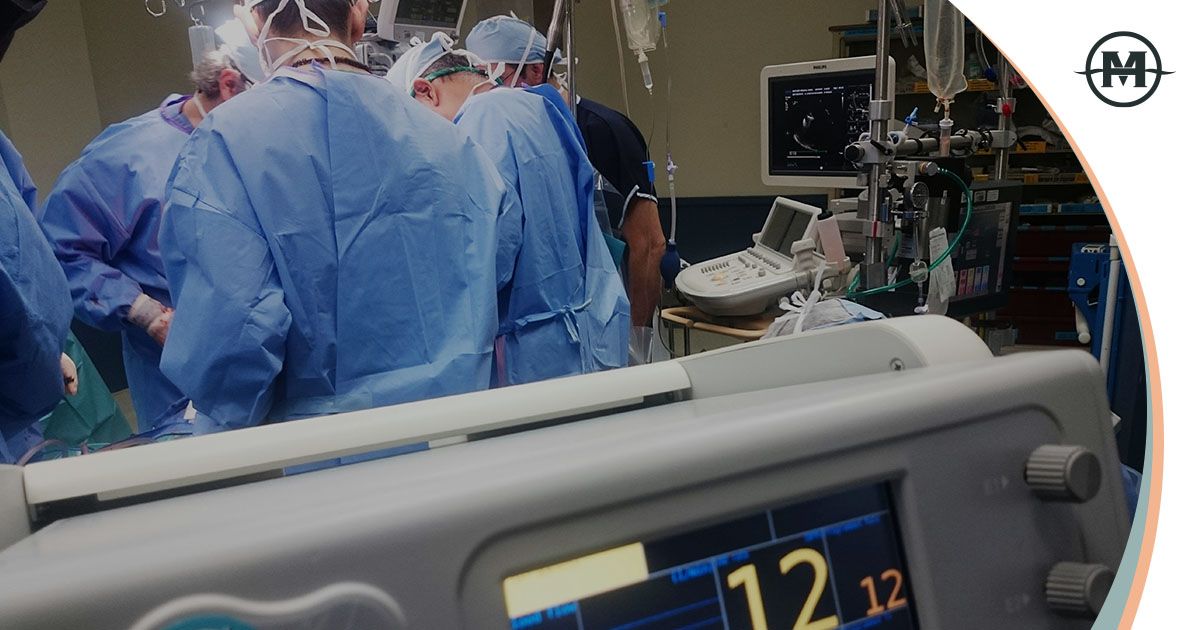
HBO’s award-winning drama, “The Pitt,” presents a realistic view of what a shift in an emergency room looks like.
You only have to watch one episode to appreciate the enormous amount of strain ER doctors and nurses are under as they move from patient to patient in an attempt to provide the best care possible. The show also dramatizes how the occasional mistake can lead to tragic consequences.
No one wakes up thinking, “This is the day I’ll be going to the ER,” but it only takes an accident or sudden onset of a medical crisis to have you rushing to the hospital.
Just as a fictional patient on “The Pitt,” you’ll suddenly find yourself in the real world of an ER surrounded by doctors and nurses you’ve never met before that you’ll be trusting with your life.
Some of those doctors have years of experience. Others might be medical students fresh from the classroom. However, they are all susceptible to making mistakes. When those emergency room errors complicate your care and cause further harm, you might be entitled to pursue a claim for compensation.
That‘s when you need to talk to a compassionate attorney at McCoy & Hiestand, PLC.
We have years of dedicated experience helping residents of Louisville take on hospitals that did not meet their expectations for care. These types of cases are not without challenges. This is why you need to have a full understanding of what medical malpractice in emergency rooms is all about.
Common Types of Medical Malpractice in the Emergency Room
To say that an emergency room is a “pressure cooker” would be an understatement.
During a typical ER shift, doctors and nurses must treat a wide range of conditions in rapid succession. Too often, there are multiple patients providing limited information, which further strains the staff. Unfortunately, that environment can become a “perfect storm” to generate preventable medical errors.
Some of the most common forms of emergency room malpractice include:
Misdiagnosis or Delayed Diagnosis
ER physicians must act quickly to determine whether the symptoms a patient presents with are life-threatening. Unfortunately, serious issues such as heart attacks, strokes, internal bleeding, or infections can sometimes be misinterpreted or overlooked. It is even worse if a patient is not seen until it is too late.
Medication Mistakes
Medications are prescribed and administered at a rapid pace in an ER. This can sometimes lead to incorrect dosages, administering the wrong medication, or failing to review a patient’s allergies. Any one of those mistakes can trigger severe complications and, in extreme cases, a fatal reaction.
Failure to Order Appropriate Tests
Doctors have an enormous number of diagnostic tools at their disposal. They can order CT scans, blood tests, or X-rays to reveal underlying medical conditions. However, if these tests are delayed or not ordered at all, a patient’s condition can deteriorate.
Improper Triage Decisions
Emergency departments’ triage systems are set up to prioritize patients. The person who’s in the most severe, life-threatening condition goes to the front of the line. If that same person with a serious condition is mistakenly classified as low priority, it can lead to dangerous delays in treatment that compromise the patient’s well-being.
Premature Discharge
The second question an ER patient asks after, “What’s wrong with me?” is always, “When can I go home?” If a patient is sent home before their condition has been properly evaluated or stabilized, it can often lead to a return trip to the ER with even more complications.
No one denies the fact that ER teams must often make decisions quickly.
However, that doesn’t excuse them from making the wrong decision. They are still obligated to meet the standard of care expected of reasonably competent medical professionals in similar circumstances. When that standard of care is compromised, serious harm may occur.
Proving Liability in an Emergency Room Malpractice Case
Filing an emergency room malpractice case can be especially complex. That is because they often involve multiple doctors, nurses, administrative staff, and vast hospital systems.
Building a strong claim requires thorough investigation and detailed evidence, including the following:
- Emergency room medical records
- Test results and imaging reports
- Triage notes and admission logs
- Physician and nurse documentation
- Hospital policies and procedures
- Expert medical opinions
Another potential complication in an emergency room malpractice case is establishing a hospital’s liability. Many ER physicians are hired as independent contractors rather than direct hospital employees.
However, hospitals may still be held liable under legal principles such as apparent agency or negligent supervision.
Determining who is legally responsible for an ER error requires a thorough legal and medical analysis. That is why working with an experienced malpractice attorney can be critical when pursuing a claim.
How an Experienced Medical Malpractice Attorney Can Help
In Kentucky, you only have one year from the date of an injury to file a civil lawsuit. With an emergency room error, that year starts on the day you discover the worsening condition.
When you consider the potential delays the hospital’s insurance company will put up and the amount of investigation necessary to prevail, you can see how that year is going to go by fast.
That is why you shouldn’t hesitate to speak with the experienced Louisville medical malpractice attorneys at McCoy & Hiestand, PLC. Our skilled attorneys can recognize what a serious ER mistake looks like. If we agree that your case has merit, we can become your advocate who takes over all negotiations with the hospital and its insurance company.
We will tap into our network of medical experts to provide a detailed analysis of what happened and how it should have been prevented. Our goal is single-minded: to deliver the maximum benefits allowed to our clients so they can heal.
Call to schedule your free consultation today. Let’s talk about what happened in the ER.